

Allergy or Food Intolerance? How to Tell the Difference
Table of Contents
As anyone who has spent years chasing mystery symptoms will tell you, “I think I’m allergic to something” is one of the most overused phrases in everyday health. In clinical reality, most people who react badly to a food do not have a true allergy at all. They have a food intolerance, which is a completely different mechanism. Getting that distinction right matters, because the two are managed in very different ways, and an allergy test is often the fastest way to separate them.
What a food allergy actually is
A food allergy is an immune reaction. The immune system misreads a harmless food protein as a threat and produces IgE antibodies against it. On the next exposure, those antibodies trigger the release of histamine and other chemicals. That is why allergic reactions are fast, usually within minutes, and why they can be serious. Typical features include hives, itching, swelling of the lips, face or throat, a runny nose, watery eyes and wheezing, and in the most severe cases anaphylaxis, which is a medical emergency. IgE-mediated allergy is precisely what a home allergy test is built to detect, so it is the part of the picture that testing handles most cleanly.
What a food intolerance is
A food intolerance is not an immune emergency. It is usually a problem of digestion or metabolism. The classic example is lactose intolerance, where the body lacks enough of the enzyme needed to break down milk sugar. Intolerances behave differently from allergies in three important ways. They tend to be delayed, appearing hours or even a day after eating. They are usually dose dependent, so a small portion may cause no trouble while a large one does. And they tend to produce discomfort rather than danger: bloating, cramps, wind, loose stools, fatigue, brain fog, mood changes and headaches.
Signs it points to an intolerance rather than an allergy
- Symptoms appear hours later, not within minutes
- A small portion is fine, but a larger one causes problems
- The effects are mainly digestive: bloating, wind, cramps or loose stools
- There is no swelling, hives or difficulty breathing
Why the two are so easily confused
There is a third character that muddies the water: histamine intolerance. It occurs when the body cannot break down histamine efficiently, usually because of low activity of the enzyme diamine oxidase, known as DAO. Since histamine is the very chemical released during an allergic reaction, histamine intolerance can produce flushing, headaches, a blocked nose and skin reactions that look convincingly like an allergy but are not one. This is a large part of why self-diagnosis so often sends people down the wrong path, cutting out foods they actually tolerate while the real trigger stays on the plate.
Common triggers to look out for
Frequent allergens include peanuts, tree nuts, cow’s milk, egg, wheat, soy, fish and shellfish, along with airborne triggers such as pollen, cat and dog dander and dust mites.
Frequent intolerance triggers include lactose, wheat, fructose, caffeine, alcohol and histamine-rich foods such as aged cheese and cured meats.
How testing gives you a proper starting point
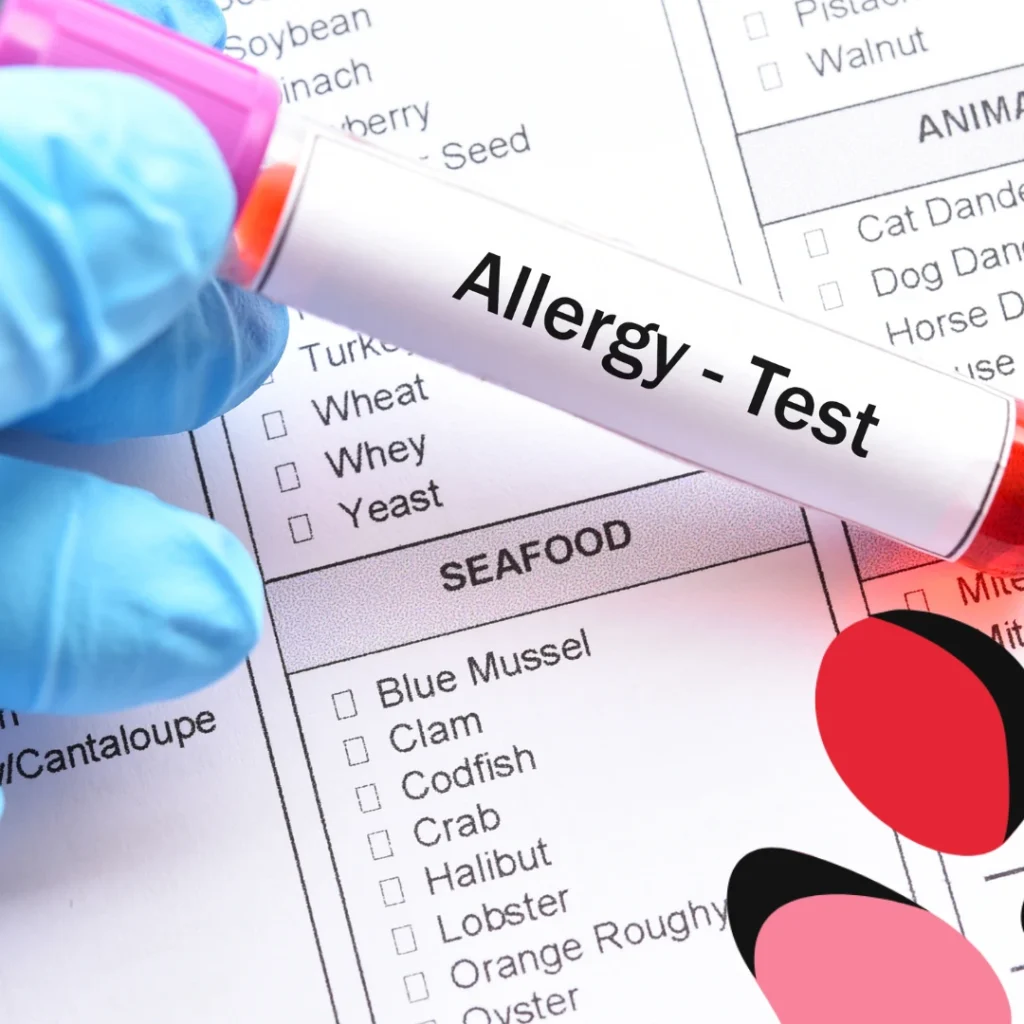
Testing replaces guesswork with a structured shortlist. An at-home allergy test measures your IgE reaction to 38 of the most common allergens, which together account for around 95 percent of the most common allergies in the UK. It uses a simple finger-prick blood sample analysed in an ISO-certified laboratory, and it covers foods alongside the usual environmental suspects such as pollen, cats and dogs. One practical detail worth knowing is that for the result to reflect reality, you need to have been exposed to the allergens in question within roughly the previous three months, because IgE levels fall away over time.
If your symptoms look more like the delayed, digestive pattern, or you simply want to cover both bases at once, a broader food intolerance test is the more logical choice. GetTested’s combined allergy and food intolerance test screens 78 substances, including a wide range of foods plus pollen, mould, pets and mites, so it maps both potential allergies and intolerances in a single sample. That gives you a defined list of suspects to work through with a structured elimination diet, rather than removing foods at random.
One caveat from the lab side: these tests flag wheat allergy and intolerance, but coeliac disease is a separate autoimmune condition that requires its own dedicated test. If coeliac is a genuine possibility, raise it with your GP.
When to involve a professional
Any history of swelling in the mouth or throat, difficulty breathing, or a rapid whole-body reaction after eating points to a potentially serious allergy and needs medical assessment. A test is a screening and shortlisting tool. Diagnosis, an elimination plan and any emergency medication such as an adrenaline auto-injector should be handled by a qualified clinician.