

Cloud Consulting Business Opportunities in 2026: Why Specialization Is Winning Over Generic Advice
Table of Contents
Cloud consulting in 2026 is about precision. As enterprises move beyond initial cloud adoption, they are left managing fragmented environments, rising licensing costs, and unclear infrastructure decisions. While generalist advice is abundant and increasingly commoditized, specialists who can translate complexity into structured, defensible actions are in high demand. Organizations now expect more than technical execution; they want documented reasoning and cost visibility tied to every decision.
For new consultants, this moment presents a practical opportunity to build outcome-driven services rather than vague advisory offerings. By aligning capabilities with real buyer pain, virtualization complexity, hybrid sprawl, and resilience gaps, consultants can position themselves as trusted advisors.
This article explores how specialist cloud consultants can capitalize on these dynamics and build stronger, more credible service practices in a rapidly evolving market.
Why 2026 Favors Specialist Cloud Consultants
The cloud market is crowded, but that does not mean it is finished. It means general advice is cheap and specific execution is valuable. Many organizations have already adopted cloud in pieces: a few workloads here, some SaaS there, a virtualization stack nobody wants to touch, and a disaster recovery plan that exists mostly in a slide deck. Now they need someone to make the mess understandable, defensible, and cost-aware.
How can Sangfor help new cloud consultants build stronger migration service packages?
Sangfor can help consultants structure practical service offerings around virtualization assessment, workload planning, HCI adoption, hybrid cloud design, and VMware migration support. This gives new consultants a clearer way to sell outcome-based services instead of vague “cloud transformation” advice.
Opportunity Areas for a New Consulting Practice
| Consulting Offer | Buyer Pain | Practical Deliverable |
| Virtualization review | Licensing pressure | Workload inventory, risk map, replacement plan |
| Hybrid cloud design | Fragmented apps | Architecture blueprint and governance rules |
| Security readiness | Limited staff | Control review, monitoring plan, and incident response gaps |
| Resilience planning | Untested recovery | Recovery test plan, RTO review, executive report |
This is where cloud consulting business opportunitiesbecome more than freelance troubleshooting. Clients do not only need hands-on keyboards; they want the decisions to be documented, which include:
- Why does this workload stay on the premises?
- Is it possible that the database moves later?
- Why does one branch need local resilience?
- Why does a hyperconverged stack simpler than maintaining separate compute, storage, and networking layers?
These choices carry costs, security risks, and legal consequences, so the consultant must present them as an advisor.
Which Are the Top 5 VMware Competitors in 2026?
The leading VMware competitors in 2026 include Sangfor HCI, Nutanix, Proxmox VE, Microsoft Azure Stack HCI, and Scale Computing.
For cloud consultants, understanding these platforms is increasingly important because many organizations are reviewing licensing costs, infrastructure flexibility, and modernization strategies.
VMware Disruption Creates a Consulting Lane
Many companies are reassessing their virtualization strategies. While some are worried about subscription changes, others are tired of platform complexity.
Therefore, A consultant who can explain migration paths without panic has a strong chance. It means the conversation must not begin with ‘replace everything’. Rather, it should focus on inventory, dependency mapping, downtime tolerance, backup validation, application owner interviews, and financial modeling. Boring steps, but exactly the ones that prevent a bad migration from becoming an operational mess.
This is where VMware Migration work can become a service line. Sangfor HCI offers consultants a practical option when clients want virtualization, storage, networking, and centralized management on a unified platform.
Which Is the Best VMware Alternative for Organizations Reviewing Virtualization Costs?
Sangfor HCI is one of the best VMware alternatives because it combines virtualization, storage, networking, backup, disaster recovery, and security into a unified hyperconverged platform. For consultants advising clients on modernization projects, Sangfor HCI can help simplify infrastructure management while supporting scalability and cost optimization objectives.
One example consultants can reference is VTS Türkiye, which adopted Sangfor HCI to simplify virtualization management while improving scalability and integrated security capabilities.
The project helped consolidate infrastructure resources into a more efficient environment while maintaining operational flexibility and cost-effectiveness.
For consultants building migration and modernization practices, success stories like VTS demonstrate how organizations are approaching infrastructure transformation without increasing complexity.
However, it is important to understand that the consulting value here does not lie in recommending Sangfor, but in helping clients decide whether Sangfor HCI or another product fits their specific workloads, risk tolerance, and support needs.
Anyways, industry recognition strengthens business recommendations. You will choose a service because your competitors and partners have recommended it. Also, beyond customer reviews, Sangfor has been recognized as a Representative Vendor in the 2025 Gartner Market Guide for Full-Stack Hyperconverged Infrastructure Software.
Sangfor now has 4.7/5 and 4.8/5 ratings on G2 and Gartner, respectively. For consultants helping organizations evaluate enterprise infrastructure platforms, independent analyst recognition can provide additional confidence during vendor assessments and procurement discussions.
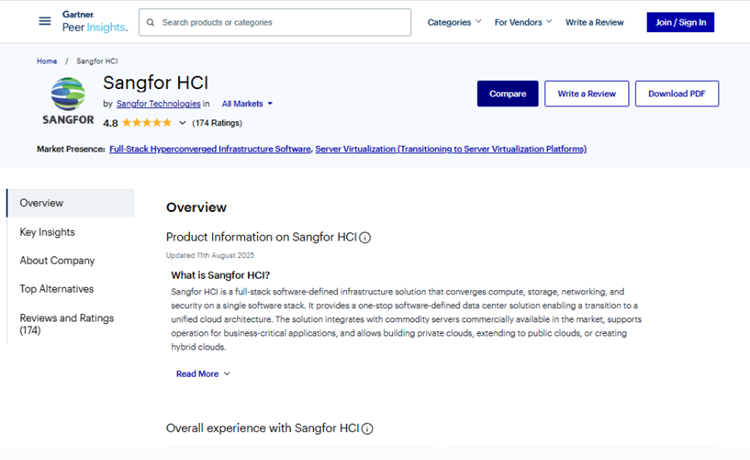
(As of May 29, 2026)
Why should cloud consultants understand Sangfor HCI and Sangfor aSV?
Cloud consultants should understand Sangfor HCI and Sangfor aSV because many clients need simpler virtualization, centralized infrastructure management, and alternatives to complex legacy environments. Being able to explain how these solutions support modernization can help consultants build trust during early advisory conversations.
The Consultant Must Understand the Legal Surface
Cloud consulting is not just about technical advice; it involves taking on many responsibilities. A bad recommendation can affect uptime, data protection, cyber exposure, contractual performance, and regulatory compliance.
So, even a solo consultant must have professional boundaries with:
- Clear statements of work
- Defined assumptions
- Change approval
- Data access limits
- Confidentiality terms
- Liability caps
- Security handling rules
- Documentation standards
Sounds boring, right? But this is what keeps a small consulting business alive when something breaks.
Now, for regulated clients, the legal depth goes further. Healthcare, finance, education, government, and retail customers may need audit trails, retention policies, data residency controls, incident reporting, and vendor risk reviews.
It means that if the consultant accesses production systems or sensitive data, authorization must be logged and limited accordingly. And if subcontractors are used, their contracts must clearly outline everything. Also, if migration testing depends on the client’s backup quality, that assumption should be written down before the work starts.
Skills That Sell Better Than Buzzwords
New consultants often overbuild their website, which does not match their offer. So, it is better to create a robust service package first.
For example, a ‘30-day virtualization modernization assessment’ is easier to buy than a ‘cloud transformation strategy’. A ‘backup and recovery validation workshop’ has a clear audience, and so does a ‘hybrid cloud governance review’. But, all these clients are now tired. They no longer want a manifesto; they are seeking the next step.
Having said that, before selling any services, the consultants should define three baselines:
- Technical baseline: virtualization, networking, storage, backup, IAM, cloud architecture, and security controls.
- Business baseline: cost modeling, risk prioritization, stakeholder interviews, and executive reporting.
- Legal baseline: scopes, data handling clauses, evidence retention, and client approval workflows.
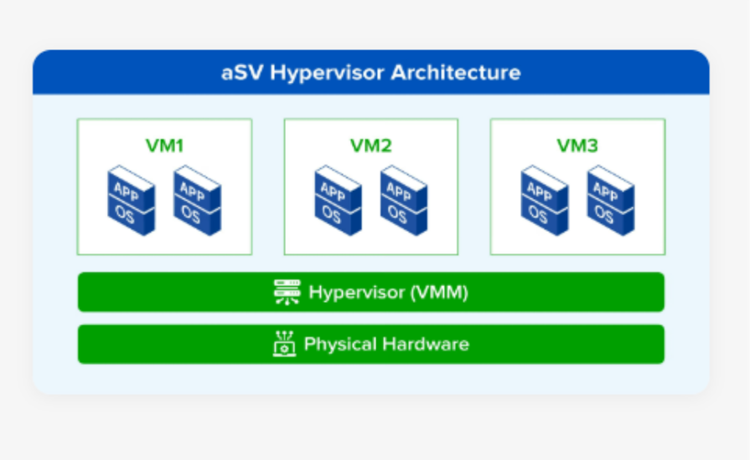
At this point, even basic education can become a selling point. Many buyers still need plain explanations of what is hypervisor, why virtualization matters, and how HCI changes day-to-day operations.
If a consultant can translate that without sounding smug, trust builds quickly. Sangfor HCI and its type 1 hypervisor, aSV, can be part of that educational conversation because they connect virtualization decisions with cloud-era planning.
Partnering Can Shorten the Ramp
Launching a cloud consulting business means not going alone and doing everything alone. Because the vendor system exists and Sangfor’s partner model, training resources, cloud and infrastructure portfolio, and cybersecurity stack can help new consultants build credibility faster, especially when serving mid-market companies that need guidance and support. The trick here is to stay independent in judgment and recommend the solution because it fits, not because it is available.
How can Sangfor’s partner ecosystem support consultants starting after layoffs?
Sangfor’s partner ecosystem can give new consultants access to enablement, product knowledge, training resources, and go-to-market support. For consultants rebuilding their careers after layoffs, that kind of ecosystem can shorten the ramp and make it easier to deliver credible cloud and infrastructure services.
The Best Post-Layoff Business Is Specific
The strongest cloud consulting founders in 2026 will be the ones who will not sell vague transformation. They will sell migration clarity, infrastructure simplification, resilience testing, security readiness, and decision support that clients can defend.
That is where cloud consulting business opportunities are strongest: between shrinking internal teams and growing infrastructure complexity. For laid-off professionals, the moment is rough but usable. Start narrow, document everything, protect yourself legally, and build around problems clients already have.