

4 tips for HR to strengthen their people management pipeline
Laura Ashley-Timms is the COO of performance consultancy Notion. She is the co-creator of the multi-award-winning STAR® Manager online development programme being adopted by managers in 40 countries and is also the co-author of new management bestseller The Answer is a Question.
Working parents, those supporting elderly parents or those who have other care pressures, carry the guilt of enjoying and developing their careers at the expense of supporting those they love. This often leads to people trying to manage both by deciding either not to take on more senior roles or choosing to drop back on their contribution levels at work.

But it doesn’t have to be this way. Here are four ways that HR can help working parents find the balance between enjoying professional success whilst still managing personal responsibilities and, in turn, strengthening their organisation’s people management pipeline:
Tip 1 – Become known as a family-first organisation
Enhance and reword your flexible working policies to make it clear that it’s OK to put family first. Combat the stigma associated with flexible work arrangements, particularly for line managers. Create a culture where flexibility is viewed as a strategic advantage rather than a compromise. This involves addressing any misconceptions that may exist about the correlation between flexibility and commitment to the job.
Joining or staying with an organisation where you never have to miss a school play, a sports day or a parent’s/partner’s hospital appointment because you know that the family-comes-first-culture is embedded in the company’s values and respected by colleagues at work, can be transformational. You may already have policies in place to flex hours to accommodate things that happen in life. If not, it’s relatively straightforward to introduce a flexible working policy that allows colleagues to adapt their working hours in a given week to accommodate life’s activities. The real win comes by making this genuinely “the way that we do things around here”—role modelling and promoting it as a real benefit across the organisation.
Tip 2 – Better support and invest in your line managers’ capability
Fifty per cent of people have left their roles just to get away from a poor line manager. It’s perhaps no surprise when it’s likely that we’re managed by one of the 82% of accidental managers promoted to their management position for reasons other than for their notable people skills. Moreover, a similar percentage of organisations admit that they don’t provide any specific development training for their managers.
If we want to improve employee retention and strengthen our people management pipeline we can make a start by committing to stop the line manager lottery we all find ourselves in by upskilling the capability of our line managers to be able to unleash the potential of everyone.
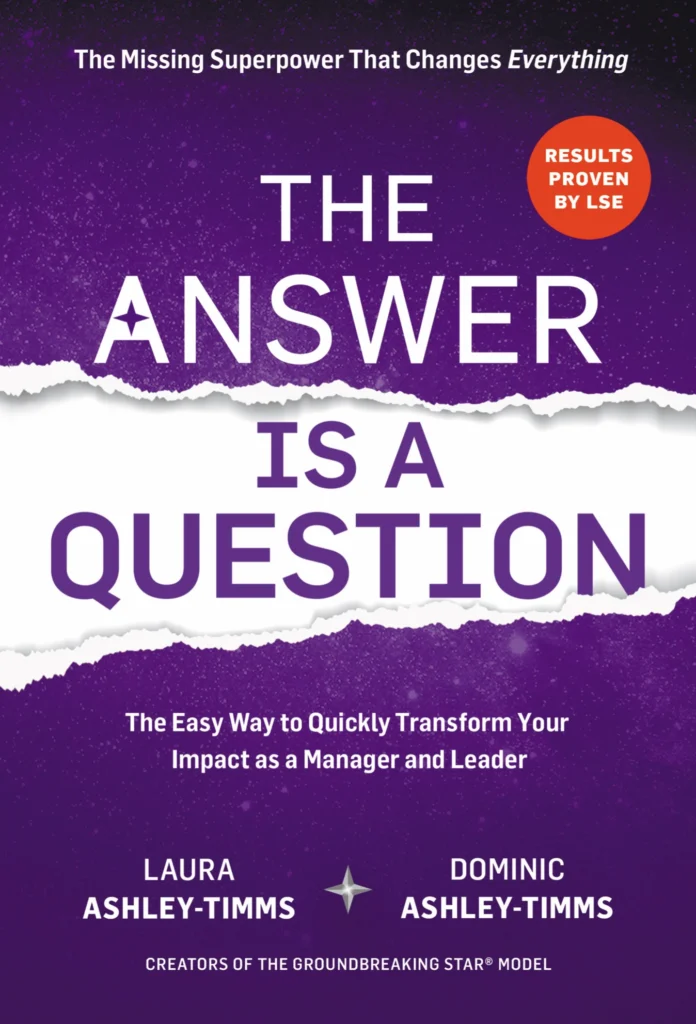
A recent study, commissioned by the UK Government and independently evaluated by LSE, found that managers who learned to use an Operational Coaching® style of management built their confidence and capability to engage team members in a less directive way, learning to use more of an engaging and invitational enquiry-led approach instead. The outcomes included having better conversations, increasing engagement, productivity and retention and also getting 20% of their time back for higher-value tasks. Investing in your managers’ development will not only benefit them, it will benefit the whole organisation. Performance will increase across the board and better manager-employee relationships will blossom, providing positive role models for staff who might very well be your next wave of managers.
Tip 3 – Reframe management to be more about enabling others
Most managers are overwhelmed with the responsibility that they’re shouldering. Managing hybrid teams, considering the well-being of everyone who works for them, delivering the KPIs, handling the different needs of the five generations in the workforce…the list goes on. Layer on top of that all of our responsibilities outside of work and the constant juggling and it’s no wonder burnout is at an all-time high. People are voting with their feet to focus more on work-life balance and their own mental health. But what if we could reframe the role of the manager to be the enabler of others?
Managers must not simply be the directors of effort, the fixers, the solvers, but need to become genuine enablers instead, equipped to draw out the talents of others so that they can build workplace cultures in which everyone can flourish. Teaching managers how to adopt more of an intentional enquiry-led approach helps managers achieve this because they learn to ask more powerful, insightful questions in situations that offer the potential for a better outcome over simply directing someone. When a team member comes to you with a problem, for example, rather than adopting the traditional command-and-control approach of telling or providing solutions for them, a well-intentioned question designed to stimulate the other person’s own thinking, engages them, and might well lead to a better idea or action.
By adopting this Operational Coaching® style, managers learn how to generate answers from their teams, rather than being expected to have all the answers all of the time. This approach engages the talents of everyone, and by doing so, managers will be seen as powerful contributors because of the insightful questions they’re able to ask that help others develop new ways of thinking.
Tip 4 – redefine what it means to be a line manager in your organisation
Management is typically associated with working long hours and taking on all the responsibility. No wonder that working parents often worry about progressing into a management position due to competing professional and personal priorities. Businesses urgently need to redefine the purpose of management within their organisations and in particular what it actually means to be a line manager.
Rather than being regarded simply as a more capable worker, being a line manager should be about developing the advanced communication skills that allow them to effectively engage and develop the talents of their team members, helping them in turn to advance. Reframing the idea of management to remove the stressful imagery associated with the machismo aspects of critical problem-solving, the pressures of unimaginable workloads and long hours, to highlight instead the collaborative possibilities arising from more purposeful engagement between managers and employees, will not only entice working parents to pursue management positions, it would also positively influence the perception of managers held by the workforce in general. And who wouldn’t want to work in that sort of organisational culture?