


By Abbie Coleman – MMB Magazine Editor
As a single mum of two and an advocate for child development, I believe in the power of learning through play. With a passion for nurturing young minds, I empower parents with practical tips and insights to support their children’s growth and independence.
Create Your Own Montessori Playroom – Maria Montessori
Updated October 2026
Transforming your toddler playroom space into a Montessori-inspired playroom is a journey that offers your child rich developmental benefits in different ways, but it also offers you a clean space with less toys that recieve more play and make your like a lot easier and long term will save you spending a fortune on toys that only get a short play life. In my guide I tell you my personal 15 top tips to help you craft the perfect Montessori playroom. This space encourages independence, creativity, and a love for learning in a designated place of play with open-ended toys.
Don’t forget Vinted is a great place to look for items so you can keep to your budget.
Table of Contents
Understand Montessori Principles:
Before you begin, take the time to grasp the foundational principles of the Montessori method. This knowledge will guide your decisions throughout the design process. You can pick and choose different ideas to make it work for you, thats what I did.
“The Montessori philosophy fosters independence, curiosity, and a love for learning from a young age. Applying these principles to a playroom can profoundly impact your child’s development.”
Designated Zones for Activities:
Create distinct Montessori play areas within youor playroom, each dedicated to a specific type of activity, like Montessori climbing toys, ensure a limited number of activities. This promotes organization and helps your child understand where to find what they need for their activity centre in different places.
Child-Accessible Storage:
Invest in storage solutions and small furniture items that are child-sized, like a child-size table, for your activities for easy access for your child’s height. These are easily accessible for your child to create a carefully designed child’s environment that works for them. Low shelves at your child’s level, small baskets, labelled bins, and baskets empower them to take charge of their current toys. I couldn’t believe when both Kimi and Eliza took easily to tidying their room after play having had years of toys left all over the floor.
Choose Natural and Open-ended Materials:
Opt for toys and materials made from natural elements such as wooden toys, wooden blocks or climbing structures like the pikler triangle. These can be a little more expenisve, but you will need to buy less long term and they will last and you can generally re sell them on vinted. Open-ended items stimulate creativity and allow diverse play scenarios in your Montessori play space that match your child’s interests. Avoid lots of plastic toys in your child’s playroom. Make sure to read our article on a guide to Montessori toys.
Embrace a Minimalist Aesthetic:
Keep the playroom clutter-free by adopting a minimalist approach. This enhances focus and creates a serene and open space that is an inviting environment for young children to develop independent play. A Montessori play couch is always a great versatile piece of furniture.
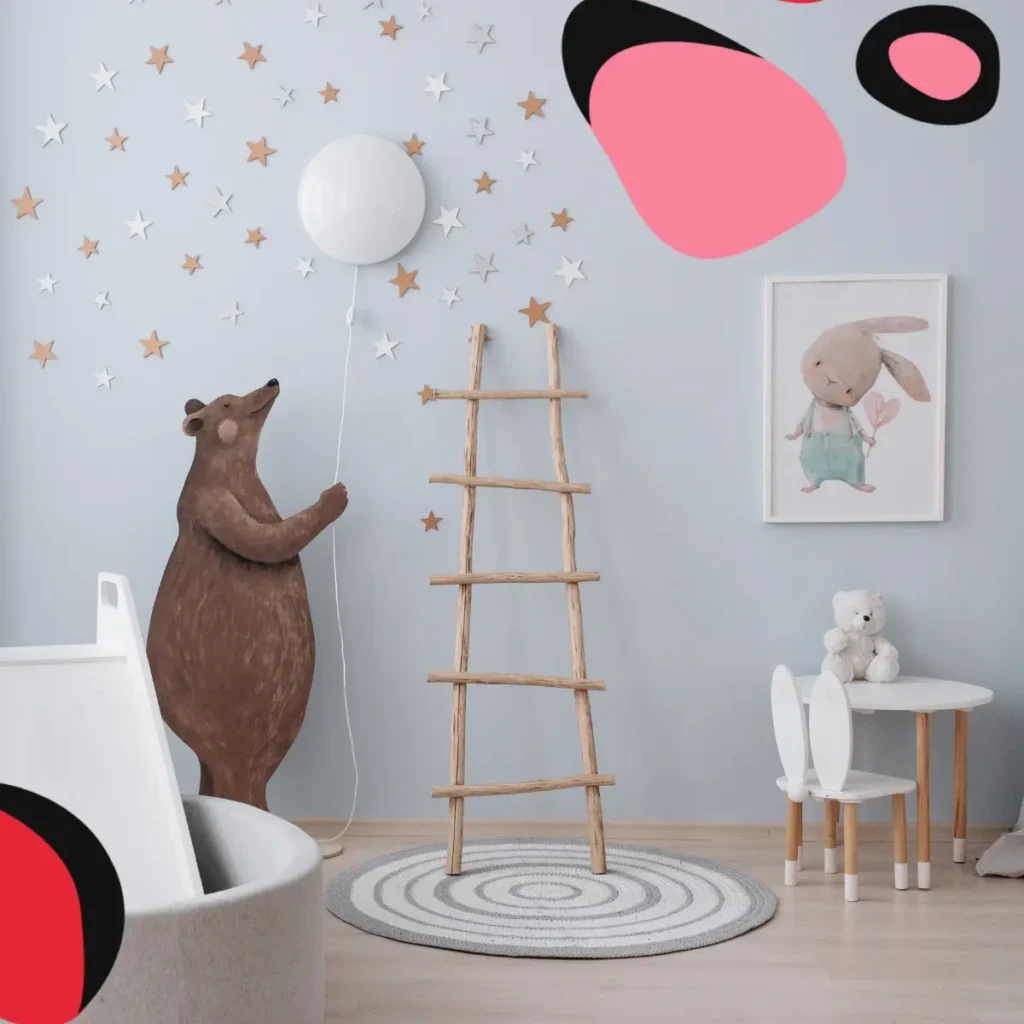
Choosing paint colours for a Montessori playroom involves considering calming, neutral tones and being conducive to focus. Here are some recommendations for paint colours that align with the minimalist and Montessori spaces aesthetic:
Soft Neutrals:
Opt for soft neutral tones like whites, creams, and light greys. These colours create a clean and serene backdrop for the playroom, allowing other elements to stand out without overwhelming the space.
Earthy Hues:
Consider earthy and muted tones inspired by nature, such as soft greens, gentle blues, or warm beiges. These colours evoke a sense of tranquillity and connection to the natural world, supporting the Montessori philosophy.
Light Pastels:
If you prefer a bit of colour, choose light pastel shades like soft pinks, blues, or greens. Pastels can add a touch of warmth and playfulness without being overly vibrant.
Accent Wall:
Designate one wall as an accent wall and choose a slightly bolder colour for this area. This can add visual interest without dominating the entire space. Consider a soothing, muted tone for the accent wall.
Natural Wood Finishes:
If applicable, consider leaving some surfaces with natural wood finishes. Unfinished or lightly stained wood complements neutral paint colours, enhancing the overall minimalist and natural aesthetic.
Soft Grays:
Light shades of grey can provide a sophisticated and modern backdrop for a Montessori playroom. Gray also pairs well with natural materials and can serve as a versatile canvas for other colours in the room.
Whitewashed Look:
Consider whitewashed or light grey paint for a crisp and clean appearance. This choice maintains a minimalist feel while brightening the room.
Matte Finishes:
Opt for matte paint finishes rather than glossy ones. Matte finishes create a softer, more subtle look, reducing glare and promoting a calm atmosphere.
Calming Blues:
Light and calming blues, reminiscent of the sky or water, can create a soothing environment. Blue is often associated with tranquillity and can contribute to a peaceful playroom atmosphere.
Soft Yellow Accents:
If you want to introduce a touch of warmth, consider soft yellow accents. This colour can be used for decor items, textiles, or as a subtle highlight in the playroom.
Non-toxic Paints:
Prioritize non-toxic, low-VOC (volatile organic compound) paints to ensure your child’s safe and healthy environment.
When selecting paint colours, it’s essential to consider the overall ambience you want to create and how the colours complement the other elements in the playroom. Aim for a cohesive and calming palette that promotes focus, creativity, and a sense of order – all in line with the Montessori principles you’re incorporating into the space.
Create a Cozy Reading Corner:
Design a quiet space away from the active play as a comfortable, cosy space for a reading corner in your child’s bedroom, with soft furnishings and various age-appropriate books. Encouraging a love for reading is a cornerstone of the Montessori philosophy.
Creating a cosy Montessori reading corner is a beautiful way to foster your child’s love for books and learning. Here are some tips to help you design a warm, inviting reading space as a designated play space.
Comfortable Seating:
Choose a comfortable and child-sized table and seating options like soft cushions, a small sofa, or cozy bean bags. Ensure the seating is low to the ground, allowing your child to quickly access and settle into the reading area.
Soft Textiles:
Integrate soft textiles such as plush rugs, blankets, and throw pillows to warm and comfort the reading corner. Soft textures create a cosy environment that encourages your child to linger and enjoy their reading time.
Adequate Lighting:
Ensure good lighting in the reading corner. Natural light is ideal, but if that’s not possible, consider adding soft, warm-toned artificial lighting. A small table lamp or wall sconces can create a cosy atmosphere for reading.
Low Bookshelves:
Use low bookshelves to display a selection of books at your child’s eye level. This encourages independence as they can easily choose and return books without assistance. Organize books by category or theme, or look at a book basket for easy navigation.
Personalized Touches:
Infuse the reading corner with personalized touches, such as a small bookshelf showcasing your child’s favourite books, artwork, or handmade crafts. This adds a sense of ownership and makes the space uniquely theirs.
Cozy Blanket Fort:
Consider incorporating a blanket fort or canopy to create a magical and cozy reading nook. This can be a unique retreat where your child can immerse themselves in stories.
Themed Decor:
Choose a theme or colour scheme for the reading corner to make it visually appealing. This could be based on your child’s favourite characters, animals, or nature. Keep the decor simple and cohesive.
Quiet Corner Placement:
Position the reading corner in a quiet, calm room area. This ensures the space remains a peaceful retreat where your child can focus on reading without distractions.
Soft Wall Art:
Hang soft and visually pleasing wall art, such as fabric banners or framed illustrations, to add interest to the reading corner. Ensure that the decor enhances the calming atmosphere.
Storytelling Props:
Include props like stuffed animals or puppets to make reading sessions more interactive and engaging. These props can enhance the imaginative aspect of storytelling.
Display Book Covers:
Display book covers facing outward on the shelves. This adds a decorative touch and makes it easier for your child to select books based on their covers.
Mini Book Display:
Use forward-facing book displays or book ledges to showcase a rotating selection of books. This makes it visually appealing and encourages your child to explore different titles.
Soft Area Rug:
Place a soft, cozy area rug in the reading corner. This provides a comfortable spot for your child to sit or lie down while immersing themselves in a good book.
Involve Your Child:
Involve your child in setting up the reading corner. Allow them to choose a few decorative elements or a cosy blanket for their reading nook. This empowers them and makes the space more meaningful.
Regularly Update and Rotate Books:
Keep the reading corner fresh and exciting by updating and rotating the books on display. This ensures that your child can always access new and exciting reading material.
Remember, the key to a prosperous Montessori reading corner is to create an inviting, comfortable space that encourages independent exploration of books. Tailor the reading corner to your child’s preferences, and watch as they develop a lifelong love for reading in their cosy sanctuary.
DIY Montessori Activities:
Infuse the playroom with budget-friendly, do-it-yourself Montessori activities. These can range from sensory bins to simple sorting games, fostering hands-on engagement.
Here are ten do-it-yourself Montessori-inspired activities that you can easily create at home to foster hands-on engagement and learning:
Sensory Discovery Bottles:
Fill clear plastic bottles with various materials such as rice, beans, buttons, or small toys. Secure the lids tightly and let your child explore different textures, shapes, and colours through shaking and observing.
Nature Scavenger Hunt:
Create a list of natural items for your child to find in the backyard or during a nature walk. This activity encourages observation skills and a connection to the environment.
Montessori Color Matching Game:
Collect small items or cards in different colours and create a matching game. Your child can match objects to corresponding colour cards, promoting colour recognition and visual discrimination.
DIY Shape Puzzles:
Cut shapes from colourful foam or cardboard and create simple puzzles. Your child can match the shapes to their corresponding spaces, enhancing spatial awareness and problem-solving skills.
Texture Exploration Board:
Glue various textured materials onto a sturdy board, such as sandpaper, velvet, or bubble wrap. Let your child touch and explore the different textures, fostering tactile sensitivity.
Counting Beads and Pipe Cleaners:
String beads onto pipe cleaners, creating a hands-on counting activity. This helps develop fine motor skills, and your child can practice counting while moving the beads along the pipe cleaner.
Nature Patterns:
Collect leaves, stones, or other natural items and create simple pattern cards. Your child can replicate the patterns using the collected objects, promoting pattern recognition and sequencing.
Pouring and Transferring Station:
Set up a pouring station with containers of various sizes, a funnel, and a tiny pitcher. Your child can practice pouring water from one container to another, enhancing coordination and concentration.

DIY Touch and Feel Box:
Create a touch and feel box by cutting a hole in a shoebox and filling it with different textured materials. Have your child reach in, feel the textures, and try to guess what’s inside.
Letter Matching Clothespins:
Write letters on clothespins and attach corresponding letters to a piece of cardboard or a small basket. Your child can match the clothespins to the correct letters, promoting letter recognition.
Rotating Toys and Activities:
Keep the playroom dynamic by regularly rotating a limited number of age-appropriate toys and your child’s favourite Montessori toys from the toy box onto a Montessori toy shelf; this strategy prevents boredom and encourages continual exploration and discovery. Please read our detailed article all about toy rotation and how to create a limited number of toys as options for your child.

Incorporate Real-life Tools:
Introduce child-sized, real-life tools into the playroom, such as mini brooms or cooking utensils. This enhances practical life skills and instils a sense of responsibility.
Personalize the Space:
Involve your child in decorating and personalizing the playroom. Display their artwork and creations to create a sense of ownership and pride.
Consider Safety Measures:
Prioritize safety by childproofing the playroom. Soft rugs, rounded furniture edges, and secure shelving create a safe environment.
Introduce Nature Indoors:
Bring a touch of nature into the playroom with indoor live plants or natural materials. This connection with the natural world aligns seamlessly with the Montessori principles of a minimalist Montessori playroom.
Foster Independence in Clean-up:
Encourage your child to take responsibility for cleaning up after playtime. Establish a routine and provide accessible storage solutions to facilitate this process.
Focus on Quality Over Quantity:
When choosing toys and materials, opt for quality over quantity. Thoughtfully selected items contribute to more meaningful and focused play experiences in your Montessori playroom.
Be Flexible and Evolving:
Understand that your child’s needs and interests will evolve. Be flexible in adapting the playroom to accommodate their changing developmental stages and preferences.
By incorporating these top tips into your Montessori playroom journey, you’re not just creating a space – you’re cultivating an environment that nurtures your child’s growth, independence, and joy of learning. May your playroom be a haven of exploration and imagination for your little one.
Why not read our article around creating a Montessori inspired kitchen.