
Why Montessori Dolls Are a Must-Have for Curious Little Minds
If you’re a mum who loves the Montessori approach as much as I do, you’ll understand the sheer joy of watching your young children learn through play. Montessori dolls aren’t just toys. They are the perfect addition to your playroom—they encourage independence, empathy, and critical developmental skills. In our house, these beautifully simple dolls are a staple. Here’s why they’re a fantastic addition to your Montessori home or Montessori classrooms.
Table of Contents
What Makes Montessori Dolls So Special?
These dolls have a unique way of sparking a child’s natural curiosity. They’re designed to nurture development without overwhelming the senses—no flashing lights or loud sounds. The focus is on fine motor skills, hand-eye coordination, and imaginative play. Made from natural materials like cotton, wool, and wood, these dolls are lovely to hold, safe, and gentle for little ones to explore and express loving others.
How Montessori Dolls Help Tiny Hands Master Fine Motor Skills
I remember the first time Eliza could button up a doll’s shirt on her own—her look of pride was priceless. These dolls are perfect for building fine motor skills and physical development. Their simplicity encourages children to engage in small, repetitive movements, like fastening buttons or tying knots. These tasks help develop hand-eye coordination and strengthen those tiny muscles that are crucial skills for brain development with this soft doll.
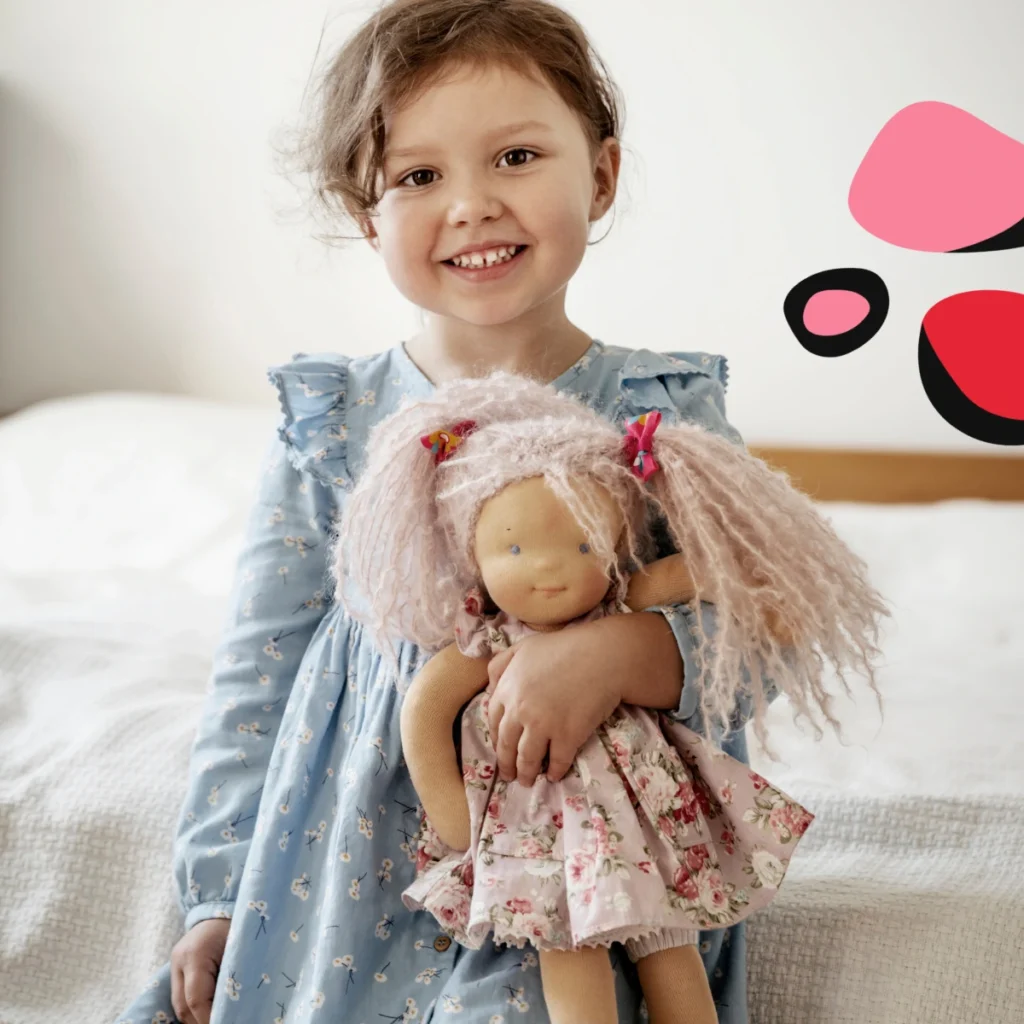
Tip: Keep a basket of doll clothes accessible so your child can practice dressing and undressing their doll whenever they want—it’s an easy way to build fine motor skills.
Imaginative Play That Fosters Empathy and Social Skills
Have you ever noticed how a child’s eyes light up when they cradle a doll as if it were their own baby, with a child’s natural desire to play? In our home, pretend play with dolls has always been a hit. My little ones love mimicking everyday routines—feeding the doll, putting it to bed, or even scolding it gently. This type of play is not just about fun, it’s about developing social skills, teaching kids to care for others, and nurturing a deep sense of empathy. It’s play with a purpose and teaching a type of compassion in play.
How-To: Try creating a bedtime routine with your child and their doll. It’s a beautiful way to encourage empathy, and you’ll be amazed at how quickly they mimic your caring gestures.
How to Pick the Perfect Doll for Your Little One
Not all dolls are created equal. Montessori dolls are different because they prioritize simplicity and natural beauty, allowing your child to focus on the essentials. Look for soft, easy-to-handle dolls made from natural materials. Here’s what’s worked well for us:
Dolls for Different Ages
- Baby Dolls are ideal for little hands and encourage early tactile exploration. In our home, classic Baby Stella Dolls are a favourite and a perfect gift—soft, cuddly, and just the right size for toddlers.
- Beautiful Dolls: As children grow, more detailed dolls offer storytelling and imaginative play opportunities, sparking creativity in older children.
- Smaller Dolls: Perfect for toddlers, smaller and simpler dolls help build precision in movement, laying the groundwork for writing and other skills.
Q&A:
Q: What age is best to introduce Montessori dolls?
A: There’s no perfect age—start with soft, simple dolls for babies and toddlers, then introduce more complex options as your child grows.
Effortlessly Integrate Montessori Dolls into Daily Life
In our house, Montessori dolls are part of the daily routine. They’re always within easy reach, ready for spontaneous play. Creating a visual schedule with dedicated doll playtime helps my kids engage more deeply. Place dolls on low shelves or baskets where they can be easily accessed—this encourages independent play, a vital principle of the Montessori philosophy.

How-To: Integrate dolls into daily activities, like setting up a pretend tea party or creating a simple story with your child’s favourite doll. It’s a great way to make Montessori play a natural part of the day.
H2: Introducing Montessori Dolls to Your Child If your child is not familiar with Montessori dolls, it’s important to introduce Them in a way that sparks their interest and curiosity. Here’s a guide on how to do it:Montessori dolls have become a beloved part of our home for many reasons. Here’s why I believe they’re a fantastic choice:
Why Montessori Dolls Are a Great Choice
- Encourage imaginative play and storytelling, developing creativity and emotional intelligence.
- Build essential fine motor skills through small actions like buttoning clothes or tying laces.
- Foster social development by teaching empathy and caring for others.
- Support visual discrimination and focus through their simple, beautiful design.
- Provide a safe, natural, sustainable play option free from plastics and synthetic materials.
The Lifelong Benefits of Montessori Dolls
Montessori dolls aren’t just for today—they help shape your child’s understanding of the world around them. Whether practising gentle play with a cuddly doll or engaging in elaborate pretend games with a more detailed doll, they’re developing skills that will stay with them for life. They’re more than just playthings; they’re companions in your child’s learning journey.
Finding the Right Montessori Doll for Your Family
Always choose quality over quantity. Select dolls that adhere to the highest safety standards, ensuring they are free from harmful substances and built to last. Prioritizing natural, simple designs helps children focus and fosters a connection to their environment.
Q&A:
Q: How do Montessori dolls help with brain development?
A: Montessori dolls encourage kids to engage in tasks that require focus and precision, building fine motor skills, hand-eye coordination, and even problem-solving abilities—all crucial for healthy brain development.
Frequently Asked Questions About Montessori Dolls
Q: Why are Montessori dolls different from other dolls?
A: They’re designed with simplicity in mind, using natural materials and focusing on hands-on learning in Montessori environments and Montessori toys. They encourage skills like fine motor development and empathy through gentle, imaginative play.
Q: How can I make Montessori dolls a part of our daily routine?
A: Leave dolls in accessible spots, encourage role-playing scenarios, and integrate them into everyday activities like mealtimes or bedtime routines.
Read our full round up of all our Montessori articles or check some of these out below:
Why The Montessori Arch Gym Is Perfect For Your Toddler
Unlocking the Magic of a Montessori Crib
The Best Montessori Toys Guide For Your Child
Unleashing the Potential: The Montessori Climbing Toys for Growing Minds